

What Is Engine Displacement: Unlocking Power and Performance Explained
Last Updated on August 17, 2026
Have you ever wondered what makes a car’s engine powerful or efficient? One key factor that often comes up is engine displacement.
But what exactly is engine displacement, and why should you care about it? Understanding this simple concept can help you make smarter choices when buying a car, tuning your engine, or even improving your driving experience. Keep reading, and you’ll discover what engine displacement really means and how it impacts your vehicle’s performance.
Engine Displacement Basics
Engine displacement is the total volume of all the cylinders in an engine. It shows how much space is inside the engine’s cylinders.
This measure helps to understand an engine’s size and power potential. Bigger displacement often means more power.
Measuring Displacement
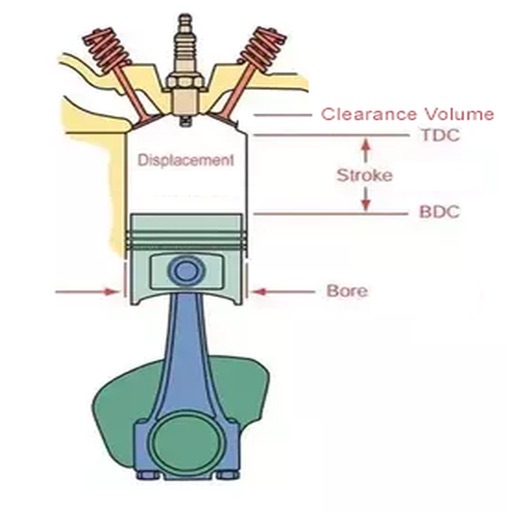
Displacement is found by measuring the volume inside one cylinder. Then multiply by the number of cylinders.
The volume of one cylinder is calculated by the area of the cylinder’s bore times the piston’s stroke length.
- Bore: the diameter of the cylinder
- Stroke: how far the piston moves inside the cylinder
- Number of cylinders: total cylinders in the engine
Units Used
Engine displacement is usually measured in cubic centimeters (cc) or liters (L). Some use cubic inches (ci) too.
Small engines often use cc, while car engines use liters. Older American engines may use cubic inches.
| Unit | Used For | Example |
|---|---|---|
| Cubic Centimeters (cc) | Motorcycles, small engines | 150 cc |
| Liters (L) | Cars, trucks | 2.0 L |
| Cubic Inches (ci) | Older American cars | 350 ci |
Credit: appadvice.com
Impact On Power Output
Engine displacement is the total volume of all the cylinders in an engine. It shows how much air and fuel the engine can use. This affects how much power the engine can produce.
Bigger engine displacement usually means more power. This happens because larger engines burn more fuel in each cycle.
How Displacement Affects Performance
Engines with larger displacement can move more air and fuel. This lets the engine produce more power and speed. Small engines often have less power but use less fuel.
Displacement also affects how smooth and strong the engine feels. Bigger engines often deliver power more smoothly at low speeds.
Relation To Torque And Horsepower
Torque is the force that turns the wheels. Horsepower is how fast the engine can do work. Both depend on engine displacement.
Larger displacement engines usually produce more torque and horsepower. This helps vehicles accelerate faster and carry heavier loads.
- More displacement means more air and fuel burned
- More fuel burned creates higher torque
- Higher torque often leads to higher horsepower
Displacement And Fuel Efficiency
Engine displacement measures the total volume inside all cylinders of an engine. It shows how much air and fuel the engine can use to make power.
Fuel efficiency depends partly on engine displacement. Smaller engines often use less fuel, but may produce less power.
Balancing Power And Economy
Engines with larger displacement give more power. They burn more fuel to do this. Smaller engines save fuel but may lack strength.
Car makers try to find a balance. They design engines that give enough power while keeping fuel use low.
- Large displacement: more power, less fuel efficiency
- Small displacement: less power, better fuel efficiency
- Choosing depends on driving needs and style
Technological Advances
New technology helps engines use fuel better, even with bigger displacement. This improves fuel efficiency without losing power.
Tech like turbocharging and direct fuel injection allows smaller engines to work like larger ones, saving fuel and boosting power.
- Turbochargers increase power from small engines
- Direct injection burns fuel more precisely
- Variable valve timing adjusts engine performance
- Hybrid systems combine engines with electric motors

Credit: www.everycar.jp
Choosing The Right Engine Size
Engine displacement affects a vehicle’s power and fuel use. Picking the correct size helps match performance to your needs.
Smaller engines often save fuel. Larger engines give more strength for heavy tasks.
Vehicle Types And Uses
Different vehicles need different engine sizes based on their use. Small cars usually have small engines. Trucks and SUVs often need bigger engines for towing and carrying loads.
- Compact cars: ideal for city driving, prefer engines under 2.0 liters.
- Sedans: balance power and fuel economy, engines range 1.8 to 3.0 liters.
- SUVs: need more power for off-road and cargo, usually 3.0 liters or more.
- Trucks: require large engines over 4.0 liters for towing and hauling.
Factors To Consider
Choose engine size by thinking about fuel costs, power needs, and driving style. Bigger engines use more fuel but give more power.
| Factor | Impact on Engine Size |
| Fuel Economy | Smaller engines save fuel but may have less power. |
| Power Needs | Larger engines provide stronger acceleration and towing. |
| Driving Area | City drivers prefer smaller engines; rural may need bigger ones. |
| Maintenance Cost | Bigger engines can cost more to maintain. |
Credit: carbuzz.com
Frequently Asked Questions
What Does Engine Displacement Mean In Simple Terms?
Engine displacement is the total volume of air and fuel an engine’s cylinders can hold.
How Is Engine Displacement Measured In Engines?
It is measured in liters or cubic centimeters by adding the volume of all cylinders.
Why Is Engine Displacement Important For Car Performance?
It shows the engine’s size, affecting power and fuel consumption.
Does Bigger Engine Displacement Mean Better Fuel Efficiency?
Not usually; larger displacement often uses more fuel but can deliver more power.
Can Engine Displacement Affect Car Insurance Costs?
Yes, cars with bigger engines may have higher insurance premiums due to more power.
Conclusion
Engine displacement shows how much air and fuel an engine can burn. It helps you understand engine power and size. Bigger displacement usually means more power but uses more fuel. Smaller engines save fuel but make less power. Knowing displacement helps you choose the right vehicle for your needs.
It also explains why some cars feel faster or stronger. This simple number affects performance, fuel use, and engine type. Keep it in mind when comparing cars or learning about engines.


