Difference Between Turbo And Supercharger: Ultimate Performance Guide
Last Updated on August 17, 2026
Have you ever wondered what sets a turbo apart from a supercharger? If you’re curious about how these two powerful devices boost your car’s performance, you’re in the right place.
Understanding the difference can help you make smarter choices for your vehicle or simply impress your friends with some car knowledge. By the end of this article, you’ll clearly see how each works, their pros and cons, and which one might suit your driving style best.
Ready to unlock the secrets behind turbochargers and superchargers? Let’s dive in!

Credit: www.youtube.com
Turbocharger Basics
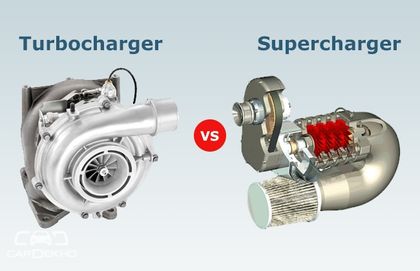
A turbocharger is a device that helps an engine make more power. It uses exhaust gases to spin a turbine and push more air into the engine.
Adding more air means the engine can burn more fuel. This makes the engine stronger without making it bigger.
How Turbos Work
A turbo has two main parts: a turbine and a compressor. The turbine spins from exhaust gases that leave the engine.
The compressor then pushes fresh air into the engine. This extra air helps the engine burn more fuel and create more power.
- Exhaust gas spins the turbine wheel
- Turbine wheel turns the compressor wheel
- Compressor forces more air into the engine
Types Of Turbochargers
There are different types of turbochargers. Each type works best for certain engines and driving needs.
Some common types include single-turbo, twin-turbo, and variable geometry turbos.
- Single-turbo:One turbo for all engine sizes, simple design
- Twin-turbo:Two turbos, often used for better power and response
- Variable Geometry Turbo (VGT):Adjusts turbine size for better efficiency at all speeds
Supercharger Essentials
Superchargers help engines get more air. This makes the engine stronger.
They are different from turbochargers but both boost engine power.
Working Principle
A supercharger uses engine power to push more air inside the engine.
This extra air helps the engine burn more fuel, making more power fast.
Common Supercharger Types
- Roots Type: Uses two spinning lobes to push air into the engine.
- Twin-Screw: Compresses air inside the supercharger for better efficiency.
- Centrifugal: Uses a spinning impeller to speed up air and push it in.
| Type | How It Works | Key Feature |
| Roots | Pushes air with lobes | Instant boost |
| Twin-Screw | Compresses air inside | High efficiency |
| Centrifugal | Spins air fast | Lightweight design |
Performance Comparison
Turbochargers and superchargers both boost engine power. They do this by forcing more air into the engine. This improves the engine’s performance.
Understanding their differences helps choose the right option. This guide looks at power delivery, lag and response time, and fuel efficiency.
Power Delivery
Superchargers deliver power instantly because they are belt-driven by the engine. Turbos rely on exhaust gases, so power builds up as the engine spins faster.
- Superchargers provide a steady boost at low and high RPMs.
- Turbochargers offer more power at higher RPMs.
- Superchargers add consistent power but can reduce engine efficiency.
- Turbos can produce more peak power but need time to spool up.
Lag And Response Time
Turbo lag happens because turbos wait for exhaust pressure to increase. Superchargers have almost no lag since they spin with the engine.
| Aspect | Turbocharger | Supercharger |
| Lag | Noticeable turbo lag at low RPM | Almost no lag, immediate boost |
| Response Time | Slower response at idle | Fast response across RPM range |
| Boost Build | Boost builds as RPM increases | Boost available instantly |
Fuel Efficiency
Turbos generally improve fuel efficiency by recovering energy from exhaust gases. Superchargers use engine power, which can lower fuel economy.
Key points on fuel efficiency:
- Turbos recycle exhaust energy, saving fuel.
- Superchargers consume engine power, increasing fuel use.
- Driving habits affect both systems’ fuel efficiency.
- Turbos may cause higher fuel use under heavy acceleration.
Credit: www.cardekho.com
Choosing Between Turbo And Supercharger
Turbochargers and superchargers both increase engine power. They do this by pushing more air into the engine.
Choosing the right one depends on your needs and the type of driving you do.
Application Scenarios
Turbochargers work best for high-speed and long-distance driving. They use exhaust gases to spin the turbine.
Superchargers give instant power. They are good for quick acceleration and low-speed driving.
- Turbo: better for highway and racing
- Supercharger: better for city and off-road
- Turbo may lag at low speeds
- Supercharger responds immediately
Cost And Maintenance
Turbochargers are usually cheaper but need more care. They run hotter and may wear faster.
Superchargers cost more and use more fuel. They have fewer moving parts and need less frequent repairs.
- Turbo: lower initial cost, higher maintenance
- Supercharger: higher cost, lower maintenance
- Turbo parts may fail if overheated
- Superchargers increase fuel use
Installation Considerations
Turbochargers need complex plumbing and space for exhaust parts. Installation can take more time.
Superchargers are easier to install. They mount directly on the engine and need fewer extra parts.
- Turbo: requires exhaust modifications
- Supercharger: mounts on engine belt
- Turbo installation may need tuning
- Supercharger fits in smaller spaces
Credit: www.hotcars.com
Frequently Asked Questions
What Is The Main Difference Between Turbo And Supercharger?
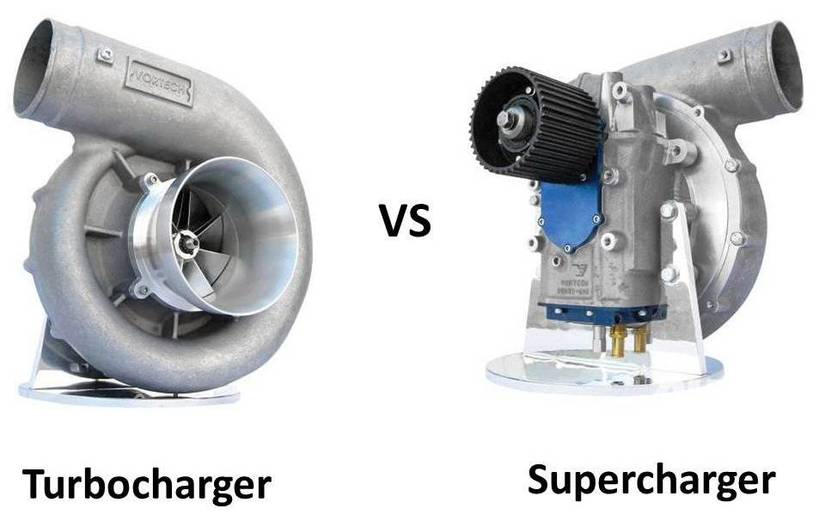
A turbo uses exhaust gases to spin, while a supercharger is engine-driven by a belt.
Which Is More Fuel-efficient: Turbo Or Supercharger?
Turbos are generally more fuel-efficient because they reuse exhaust energy, unlike superchargers.
Does A Supercharger Provide Power Instantly?
Yes, superchargers offer immediate power since they are directly connected to the engine.
Why Do Turbos Have Lag But Superchargers Do Not?
Turbos need time to spool up from exhaust gases; superchargers spin instantly with the engine.
Which Is Better For Everyday Driving, Turbo Or Supercharger?
Turbos are better for daily use due to better fuel economy and smoother power delivery.
Conclusion
Turbochargers and superchargers both boost engine power effectively. Each uses different methods to increase air intake. Turbos rely on exhaust gases, while superchargers use engine power directly. This causes differences in performance and response time. Knowing these helps choose the right option for your needs.
Both improve speed and efficiency but in unique ways. Understanding the basics can guide better decisions about car upgrades. Choose based on driving style and engine type. The right choice enhances your vehicle’s performance and enjoyment.