How Car Jacks Work: Unlocking the Power of Vehicle Lifting
Last Updated on August 17, 2026
Have you ever wondered how a car jack actually lifts your vehicle off the ground with such ease? Whether you’re changing a tire or checking under the hood, understanding how your car jack works can make the task safer and quicker.
This simple tool uses clever mechanics to do heavy lifting, and once you know the secrets behind it, you’ll feel more confident the next time you need to use one. Keep reading, and you’ll discover exactly how your car jack works, so you can handle roadside emergencies like a pro.
Types Of Car Jacks
Car jacks help lift vehicles to change tires or do repairs. Different types of jacks work in different ways.
Choosing the right jack depends on the car and the job you need to do.
Scissor Jacks
Scissor jacks use a simple mechanical system. You turn a screw to raise or lower the jack.
These jacks are small and light. They are often included with cars as a backup tool.
- Easy to store in a car trunk
- Best for light lifting jobs
- Requires manual effort to operate
Hydraulic Jacks
Hydraulic jacks use fluid pressure to lift heavy loads smoothly. They need less effort than scissor jacks.
You pump a handle to raise the jack. The fluid pushes a piston up to lift the car.
- Good for heavier vehicles
- Easy to use with less force
- Requires hydraulic fluid and maintenance
Bottle Jacks
Bottle jacks look like a small bottle with a piston on top. They use hydraulic pressure to lift cars.
They are strong and compact but have limited lifting height compared to floor jacks.
- Can lift heavy loads easily
- Compact and portable design
- Works best on flat, solid surfaces
Floor Jacks
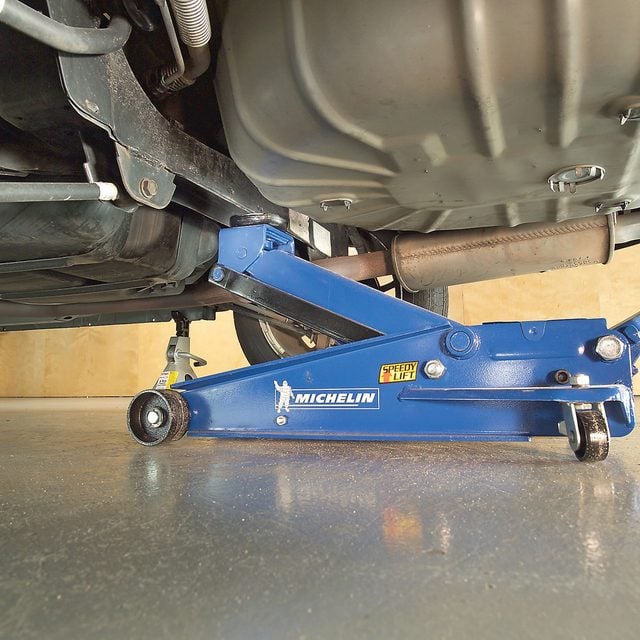
Floor jacks have a long handle and wheels for easy movement. They use hydraulic power to lift cars.
They provide stable lifting and can reach higher points under the car.
- Easy to move around
- Good for garages and workshops
- Can lift cars higher than other jacks
Credit: www.familyhandyman.com
Mechanical Principles Behind Lifting
Car jacks help lift heavy vehicles safely and easily. They use simple machines to increase force. Understanding these machines shows how jacks work well.
This article explains three main principles: lever mechanics, hydraulic pressure, and screw threads. Each plays a key role in lifting cars.
Lever Mechanics
A lever is a rigid bar that pivots around a point called the fulcrum. Car jacks use levers to multiply force.
- The handle acts as the lever arm.
- The fulcrum is the pivot point on the jack.
- Applying force on the handle lifts the car with less effort.
- The longer the lever arm, the easier it is to lift.
Hydraulic Pressure
Hydraulic jacks use fluid to lift heavy loads. Pressure applied on a small piston moves fluid to a larger piston.
| Part | Function |
| Small Piston | Receives force from the user |
| Hydraulic Fluid | Transfers pressure evenly |
| Large Piston | Lifts the car by moving upward |
Screw Threads
Screw jacks use a threaded rod to lift a load. Turning the screw converts rotational motion into lifting motion.
Key points about screw threads in jacks:
- The screw’s threads increase force gradually.
- Turning the handle moves the screw up or down.
- The thread pitch controls how fast the jack lifts.
Step-by-step Lifting Process
Lifting a car with a jack is a careful process. It helps you change tires or check under the vehicle.
Following the right steps keeps you safe and protects the car from damage.
Positioning The Jack
First, park the car on a flat surface and apply the parking brake. Find the correct lift point under the car. This is usually near the wheels on the frame.
- Check the owner’s manual for the exact jack point.
- Clear the area around the jack point.
- Place the jack under the lift point securely.
- Make sure the jack base sits flat on the ground.
Engaging The Lift
Once the jack is in position, start lifting slowly. Turn the handle or pump the lever steadily. Watch the car as it rises.
- Lift the car until the tire is off the ground.
- Stop if you feel the car shifting or the jack slipping.
- Adjust the jack if needed and continue lifting.
Securing The Vehicle
After lifting, keep the car stable before working on it. Use safety stands to hold the car firmly.
| Item | Purpose |
| Jack Stand | Supports the car to prevent falling |
| Wheel Chocks | Stops the car from rolling |
| Parking Brake | Keeps the car in place during lifting |

Credit: www.youtube.com
Safety Tips And Best Practices
Using a car jack is important for many repairs and tire changes. It lifts the car safely off the ground. Knowing how to use it correctly keeps you safe.
Follow safety tips and best practices to avoid accidents. Always prepare before lifting your car with a jack.
Choosing The Right Jack
Pick a jack that fits your car’s weight and height needs. Different jacks work for different vehicles and jobs.
Check the jack’s weight limit. Never use a jack that cannot hold your car safely.
- Use a hydraulic jack for heavy cars
- Use a scissor jack for small vehicles and emergencies
- Check the lift height to reach your car’s lifting points
- Buy a jack with safety locks for extra security
Using Jack Stands
Never rely only on the jack to hold your car up. Always use jack stands to support the vehicle after lifting.
Place jack stands under solid parts of the car frame. Lower the car slowly onto the stands to keep it stable.
- Use jack stands rated for your car’s weight
- Place stands on a flat, hard surface
- Position stands under manufacturer’s recommended lift points
- Test stability before working under the car
Avoiding Common Mistakes
Many accidents happen from simple errors. Avoid these mistakes to stay safe.
- Do not jack up the car on soft or uneven ground
- Never use a jack that is damaged or rusted
- Do not work under a car supported only by a jack
- Keep hands and feet clear when lifting or lowering
- Use wheel chocks to prevent the car from rolling

Credit: jingjiairjack.com
Frequently Asked Questions
What Are The Main Types Of Car Jacks?
There are scissor jacks, bottle jacks, and hydraulic floor jacks used for lifting cars.
How Does A Hydraulic Car Jack Work?
It uses fluid pressure to lift heavy loads smoothly and with less effort.
Can A Car Jack Lift Any Vehicle Size?
Most jacks have weight limits; check your jack’s capacity before use.
Is It Safe To Use A Car Jack Alone?
Always use jack stands for safety; never rely only on the car jack.
How Do I Maintain My Car Jack For Long Life?
Keep it clean, lubricate moving parts, and check for leaks regularly.
Conclusion
Car jacks make lifting cars easier and safer. They use simple tools like screws or hydraulics. Knowing how they work helps you use them right. Always place the jack on a flat surface. Check the jack’s weight limit before lifting.
Stay safe and never rush the process. Understanding car jacks can save time and effort. Keep your car and yourself protected. Simple tools with smart designs do the job well. Learning these basics helps with car repairs or emergencies.