

Signs Of A Failing Ball Joint: Key Warning Signals You Must Know
Last Updated on August 17, 2026
Have you noticed strange noises or unusual handling when you drive? These could be early signs that your ball joint is failing.
Ignoring this problem can put your safety at risk and lead to costly repairs. But how do you know if your ball joint is really the issue? You’ll discover the key signs to watch for so you can act before a small problem turns into a big one.
Keep reading to protect your car and yourself on the road.

Credit: www.reddit.com
Common Symptoms
Ball joints connect the wheels to the suspension in a car. They help the wheels move smoothly. When ball joints fail, the car may show signs that need attention.
Knowing the common symptoms can help you spot problems early. This can keep your car safe and avoid costly repairs.
Unusual Noises
Failing ball joints often cause strange sounds when driving. You may hear clunking or knocking noises. These sounds usually come from the front wheels.
The noises get louder when going over bumps or turning the steering wheel. This happens because the worn ball joint moves too much inside its socket.
Steering Issues
Bad ball joints affect how the car steers. You might feel the steering is loose or shaky. The car could pull to one side without you turning the wheel.
These issues happen because the ball joint can no longer hold the wheel firmly. This makes it hard to control the car and can be dangerous.
Uneven Tire Wear
When ball joints fail, tires wear out unevenly. You may see more wear on the inside or outside edges of the tires. This happens as the wheels do not stay in the right position.
Uneven tire wear reduces tire life and can cause poor handling. Checking your tires often helps catch this symptom early.
Credit: medium.com
Physical Inspection Tips
Checking your ball joints regularly helps keep your vehicle safe. You can find signs of wear by looking closely.
Use simple tools and your hands to spot problems early. This saves you from bigger repairs later.
Visual Damage
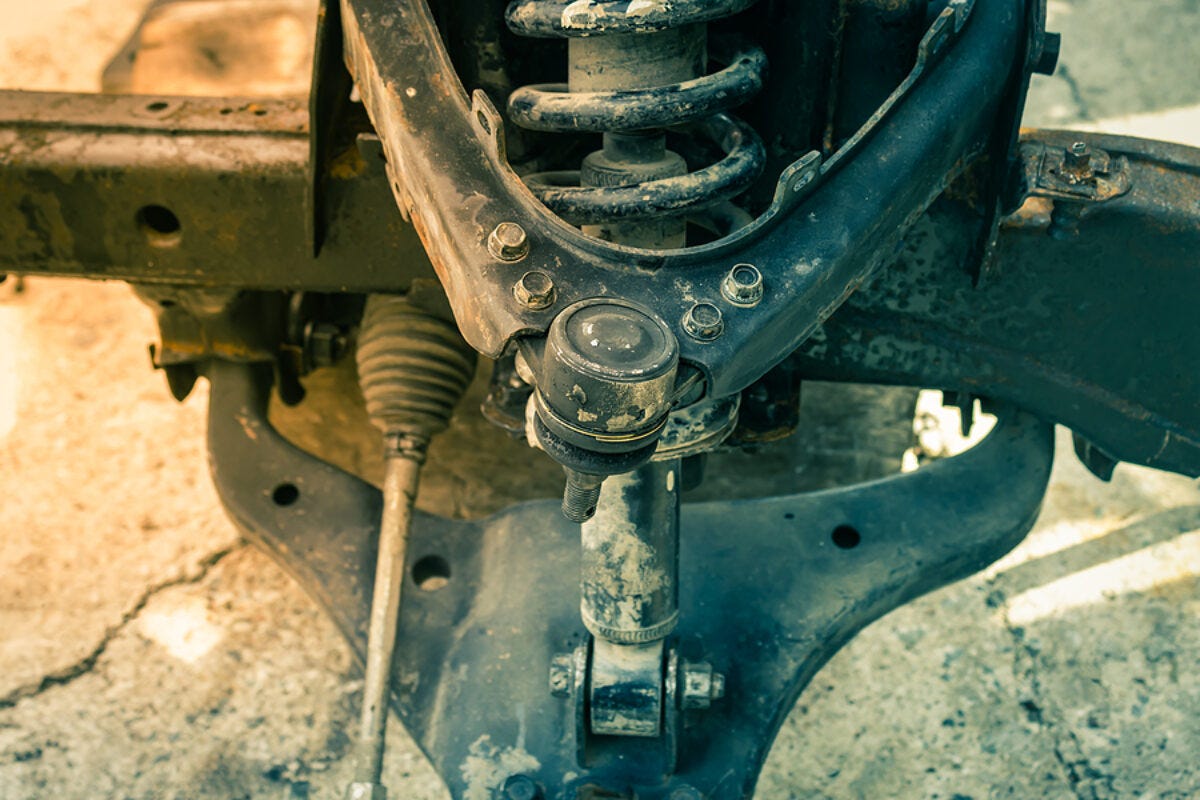
Look at the ball joint for cracks or broken parts. Damaged boots can let dirt in and cause fast wear.
Rust or corrosion on the ball joint shows it may be failing. Check all sides carefully under good light.
- Cracked or torn rubber boots
- Rust on metal parts
- Broken or bent components
Excessive Play
Grab the tire at the top and bottom and try to move it back and forth. Too much movement means worn ball joints.
Use a pry bar to gently lift the control arm near the ball joint. If it moves easily, the joint may be loose.
- More than 0.1 inches movement is too much
- Loose feeling when pushing or pulling
- Unusual noise during movement
Grease Leakage
Check around the ball joint for grease spots or oily residue. Leaking grease means the seal is damaged.
Without enough grease, the ball joint will wear faster and fail soon. Look under the car for any drips.
- Grease around the joint or control arm
- Wet or oily areas on the suspension
- Missing or damaged grease boot
Driving Risks
Ball joints connect the wheels to the suspension. They help your car steer and move smoothly. When ball joints fail, driving becomes dangerous.
This guide explains the main risks of driving with bad ball joints. Knowing these signs helps you stay safe on the road.
Loss Of Control
Failing ball joints can cause your wheels to move improperly. This problem makes steering hard and unpredictable. You may feel the car pull to one side or wander on the road.
- Difficulty steering straight
- Unexpected wheel movement
- Car drifts during turns
- Loose or shaky steering wheel
Increased Vibration
Bad ball joints cause vibrations in the steering and suspension. You may feel shaking in the steering wheel or the whole car. These vibrations get worse as you drive faster.
| Speed (mph) | Vibration Level |
| 20 | Low |
| 40 | Medium |
| 60+ | High |
Safety Hazards
Driving with worn ball joints is risky. They can break suddenly, causing accidents. The car may lose wheel alignment or even drop a wheel.
- Sudden loss of steering control
- Uneven tire wear
- Wheel separation
- Brake system damage
Maintenance And Replacement
Ball joints connect your vehicle’s suspension and wheels. Keeping them in good shape is important for safe driving.
Regular checks and timely replacement help avoid accidents and costly repairs.
Regular Checks
Inspect ball joints for wear and damage often. Look for torn boots, grease leaks, and loose movement.
- Listen for clunking sounds when turning or braking
- Check for uneven tire wear
- Feel for vibrations or steering play
- Look under the vehicle for grease leakage
When To Replace
Replace ball joints if you notice noise, looseness, or damage. Driving with bad ball joints is unsafe.
| Sign | Reason to Replace |
| Clunking noises | Worn or loose ball joint |
| Excessive play in steering | Reduced control |
| Visible damage or corrosion | Risk of failure |
| Uneven tire wear | Misalignment caused by bad joint |
Choosing Quality Parts
Select strong and durable ball joints. Quality parts last longer and keep your vehicle safe.
- Buy from trusted manufacturers
- Check for warranty details
- Match parts with your vehicle model
- Consider OEM or high-grade aftermarket parts

Credit: www.lemmymorgan.com
Frequently Asked Questions
What Are The Common Symptoms Of A Failing Ball Joint?
Worn ball joints cause clunking noises, uneven tire wear, and shaky steering.
How Does A Bad Ball Joint Affect Vehicle Handling?
A failing ball joint makes steering loose and less responsive, risking control loss.
Can A Failing Ball Joint Cause Tire Damage?
Yes, it leads to uneven tire wear by misaligning the wheels.
How To Visually Inspect A Ball Joint For Failure?
Look for torn boots, rust, or excessive play in the joint area.
Is It Dangerous To Drive With A Failing Ball Joint?
Yes, it can cause steering failure and accidents if not fixed promptly.
Conclusion
Failing ball joints show clear signs that should not be ignored. Strange noises, uneven tire wear, and loose steering are common clues. Driving with bad ball joints can cause serious accidents. Regular checks help catch problems early and keep you safe.
Don’t wait for big trouble—pay attention to these signs today. Your car’s health depends on it. Stay alert, act fast, and protect your ride.


