Last Updated on November 25, 2025 by Aaron Blake
Have you noticed your car acting up lately? Maybe it’s struggling to start, or you feel it jerking while you drive.
These could be warning signs that your spark plugs are faulty. Spark plugs play a crucial role in keeping your engine running smoothly. Ignoring the signs of worn-out spark plugs can lead to costly repairs down the road. Keep reading to learn how to spot these warning signals early and keep your vehicle performing at its best.

Credit: simonsautorepairtaunton.com
Contents
Common Engine Performance Issues
Faulty spark plugs can cause several engine problems. These issues affect how your car runs and starts.
Recognizing the signs early helps you avoid bigger engine damage. Two common problems are rough idling and trouble starting the engine.
Rough Idling And Misfires
When spark plugs fail, the engine may run unevenly at idle. This rough idling feels like shaking or vibration inside the car.
- Engine shakes or vibrates when stopped
- Car misfires or jerks while driving
- Loss of engine power during acceleration
- Increased fuel consumption
- Check engine light may turn on
Difficulty Starting The Engine
Bad spark plugs make it hard for the engine to start. You might need several tries before the car turns on.
| Symptom | Cause | Effect |
| Engine cranks but won’t start | Weak spark from worn plugs | Fuel does not ignite properly |
| Longer starting time | Carbon buildup on plugs | Delayed combustion |
| Engine stalls after start | Faulty spark plug wires | Interrupts ignition |

Credit: www.acg.aaa.com
Fuel Efficiency And Emission Problems
Faulty spark plugs can cause your car to use more fuel than usual. This reduces the overall fuel efficiency.
They also affect the exhaust emissions, making your vehicle pollute more. Understanding these signs helps keep your engine healthy.
Increased Fuel Consumption
When spark plugs do not work well, the engine burns fuel less efficiently. This causes the fuel meter to drop faster.
- Engine misfires use extra fuel
- Incomplete combustion wastes gasoline
- Poor ignition timing lowers miles per gallon
- Rough engine idling increases fuel use
Excessive Exhaust Smoke
Bad spark plugs can lead to more smoke from the exhaust pipe. This smoke shows that fuel is not burning properly.
| Smoke Color | Possible Cause |
| Black | Too much fuel in the engine |
| White | Coolant leaking into combustion chamber |
| Blue | Oil burning due to worn spark plugs |
Physical Signs Of Spark Plug Damage
Spark plugs help start your car’s engine by creating a spark. Over time, they can get damaged. You can often see signs of this damage by looking at the spark plugs.
Knowing the physical signs of spark plug damage helps you fix problems early. This keeps your engine running smoothly.
Worn Or Fouled Electrodes
The electrodes are the metal parts that create the spark. They can wear down or get dirty over time. Worn electrodes look rounded or thin instead of sharp.
Fouled electrodes have black, oily, or sooty buildup. This stops the spark from jumping properly. It can cause your engine to misfire or run poorly.
- Rounded or thin electrodes
- Black, oily, or sooty buildup
- Gap between electrodes may widen
- Cracks or chips on the electrode tips
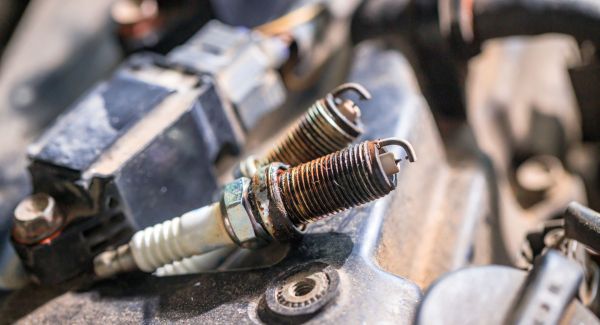
Corrosion And Deposits
Corrosion looks like rust on the spark plug’s metal parts. It stops electricity from flowing well. Deposits are hard or soft buildup from fuel or oil.
Both corrosion and deposits can cause bad engine starts and lower fuel efficiency. They also make the spark plug less reliable.
- Rusty or greenish metal parts
- White or gray hard deposits
- Soft, oily deposits covering the plug
- Damaged threads from corrosion
Credit: www.waynesgarageinc.net
When To Replace Spark Plugs
Spark plugs help start your engine by igniting fuel. Over time, they wear out and stop working well.
Knowing when to replace spark plugs keeps your car running smoothly and saves money on repairs.
Mileage And Maintenance Schedule
Most car makers suggest changing spark plugs every 30,000 to 100,000 miles. Check your owner’s manual for the exact number.
Replacing spark plugs on time helps avoid engine problems and keeps fuel efficiency high.
- Older cars usually need new spark plugs at 30,000 to 50,000 miles
- Newer cars with long-life plugs may last up to 100,000 miles
- Follow your car’s recommended schedule for best results
Impact On Vehicle Performance
Faulty spark plugs cause your engine to run rough or misfire. This lowers power and wastes fuel.
Replacing old spark plugs improves how your car starts and drives. You will notice better acceleration and smoother rides.
- Poor spark plugs can cause hard starts or no start at all
- Bad plugs reduce gas mileage and increase emissions
- New plugs give a stronger spark for better engine power
Frequently Asked Questions
What Are Common Signs Of Faulty Spark Plugs?
Engine misfires, rough idling, poor acceleration, and low fuel efficiency often indicate bad spark plugs.
How Do Faulty Spark Plugs Affect Car Performance?
They cause uneven engine running, reduce power, and increase fuel consumption.
Can Faulty Spark Plugs Cause Difficulty Starting A Car?
Yes, worn spark plugs can make the engine hard to start or fail to start.
How Often Should Spark Plugs Be Checked Or Replaced?
Spark plugs usually need checking every 30,000 miles or as recommended by the car maker.
What Noises Indicate Spark Plug Problems?
Popping, coughing, or sputtering sounds from the engine can signal spark plug issues.
Conclusion
Faulty spark plugs cause many engine problems. They can make your car run rough or stall. You might notice poor fuel economy or hard starts. Catching these signs early helps avoid bigger repairs. Regular checks keep your engine healthy and smooth.
Don’t ignore strange engine noises or poor performance. A quick spark plug check saves time and money. Stay alert to these signs for better car care.