Last Updated on November 25, 2025 by Aaron Blake
Is your car acting up with flickering lights, dead batteries, or strange electrical smells? Electrical issues can be tricky and frustrating, but you don’t have to be an expert to find the problem.
Understanding how to diagnose car electrical issues can save you time, money, and stress. You’ll learn simple steps to identify what’s wrong with your vehicle’s electrical system. By the end, you’ll feel confident spotting the signs and knowing what to check first.
Let’s dive in and take control of your car’s electrical health!
Contents
Common Electrical Problems
Car electrical problems are common and can cause many issues. Knowing how to find these problems helps keep your car working well.
This guide explains some common electrical problems and how to check them step by step.
Battery And Alternator Issues
The battery provides power to start the car. The alternator charges the battery while the engine runs.
Problems with the battery or alternator cause dim lights or a car that won’t start.
- Check battery voltage with a voltmeter. It should be around 12.6 volts when off.
- Start the car and check voltage again. It should be 13.5 to 14.5 volts if the alternator works.
- Look for corrosion on battery terminals and clean if needed.
- Listen for strange noises from the alternator, like grinding or squealing.
Faulty Wiring And Connections
Wiring carries electricity to all car parts. Loose or damaged wires cause many electrical problems.
Check wires and connections for damage, corrosion, or looseness to fix issues.
- Inspect wiring near the battery and fuse box for wear or cuts.
- Make sure connectors are tight and clean.
- Use a test light or multimeter to find broken wires.
- Replace or repair damaged wires to restore proper function.
Blown Fuses And Relays
Fuses and relays protect electrical circuits from damage. A blown fuse or bad relay stops power flow.
Check the fuse box for blown fuses or faulty relays to fix electrical problems.
- Locate the fuse box inside the car or engine bay.
- Look for fuses with broken metal strips and replace them.
- Test relays by swapping with a similar one that works.
- Replace any faulty fuses or relays with the correct rating.
Credit: autogarageservices.com
Essential Tools For Diagnosis
Car electrical issues can be tricky to find without the right tools. Using proper devices helps spot problems fast. This guide covers key tools to check your car’s electrical system.
Knowing how to use these tools makes repairs safer and more accurate. Each tool serves a unique purpose in diagnosing different electrical faults.
Multimeter Basics
A multimeter measures voltage, current, and resistance in circuits. It helps find broken wires, bad fuses, or dead batteries. Learning to read its display is important for correct results.
- Set the dial to the correct measurement type (voltage, current, resistance)
- Use the red probe for positive and black for negative connections
- Test battery voltage to check charge level
- Measure resistance to find broken wires or bad connections
- Check current flow to see if components draw power properly
Test Light Usage
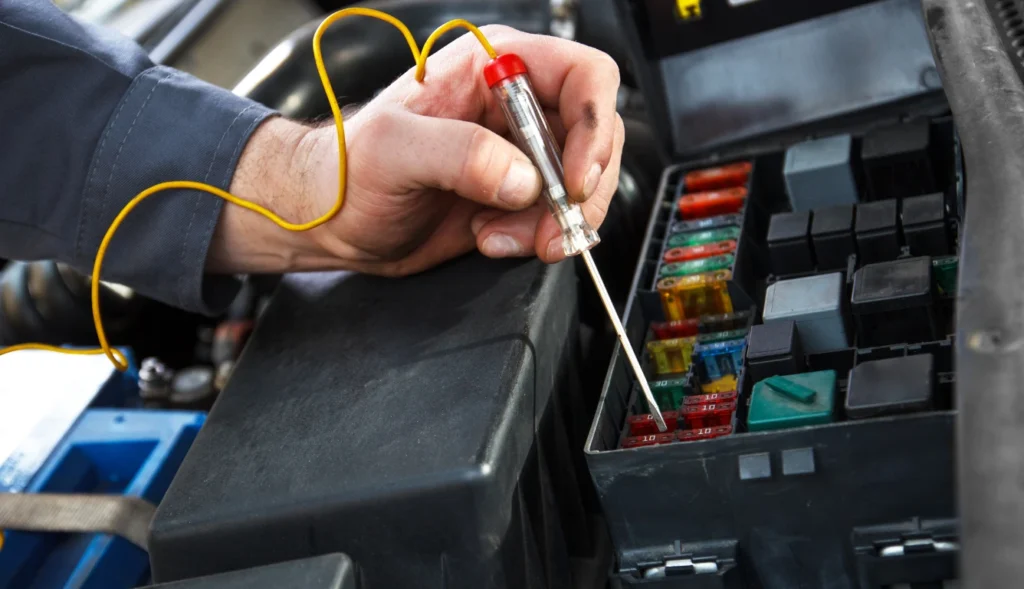
A test light shows if power reaches a point in a circuit. It is simple and quick for basic checks. The light glows when current flows through it.
| Test Light Feature | Purpose |
| Probe | Touch points in the circuit to test power |
| Light bulb | Lights up when voltage is present |
| Ground clip | Connects to chassis or battery negative |
Use a test light to check fuses, switches, and wiring quickly. It does not give exact voltage but confirms power presence.
Obd-ii Scanner Benefits
An OBD-II scanner reads trouble codes from the car’s computer. It helps find electrical issues linked to sensors or control units. This tool can save time by pointing to the problem area.
- Connects to the car’s OBD-II port
- Reads stored error codes
- Clears codes after repair
- Monitors live sensor data
- Works on most cars made after 1996
Step-by-step Diagnostic Process
Car electrical issues can cause many problems. Finding the cause helps fix it fast.
This guide explains the main checks to diagnose electrical faults step-by-step.
Checking Battery Health
Start by checking the car battery. A weak or dead battery often causes electrical faults.
- Turn off the car and open the hood.
- Inspect battery terminals for corrosion or dirt.
- Use a voltmeter to measure battery voltage.
- Look for a reading of about 12.6 volts when the car is off.
- Test the battery under load to check its strength.
Inspecting Wiring And Fuses
Next, check wiring and fuses for damage or loose connections.
| Component | What to Check | Tools Needed |
| Wiring | Look for cuts, frays, or burns | Visual Inspection, Multimeter |
| Fuses | Check if blown or damaged | Fuse Tester or Multimeter |
| Connectors | Ensure tight and clean connections | Visual Inspection |
Testing Electrical Components
Finally, test key electrical parts to find failures.
- Check headlights, brake lights, and indicators work properly.
- Test switches and buttons for proper function.
- Use a multimeter to measure resistance and voltage on components.
- Replace any parts that do not meet specifications.

Credit: autocorrectaz.com
Tips For Accurate Troubleshooting
Car electrical problems can be tricky to find. Accurate troubleshooting helps save time and money.
Use a clear plan and follow safety rules to diagnose issues correctly. This guide shows helpful tips.
Safety Precautions
Always protect yourself before working on car electrical systems. Electricity can cause shocks or fires.
Wear insulated gloves and avoid wet conditions. Disconnect the battery to stop current flow when needed.
- Use tools with insulated handles
- Work in a dry, well-lit area
- Disconnect the negative battery terminal first
- Keep metal objects away from battery terminals
- Read the car manual for electrical warnings
Systematic Testing Approach
Test one part of the electrical system at a time. This helps find the exact problem faster.
Start with simple checks like fuses and battery voltage. Use a multimeter to measure electrical values.
- Check battery charge and connections
- Inspect fuses and relays for damage
- Test wiring for breaks or shorts
- Measure voltage at problem areas
- Replace parts only if tests show faults
When To Seek Professional Help
Some electrical issues need expert knowledge and tools. Don’t risk causing more damage.
Ask a professional if problems involve complex systems like the ECU or airbags. Also get help if you feel unsafe.
- Electrical problems persist after basic tests
- Issues with engine control or safety devices
- Unfamiliar with electrical tools or procedures
- Signs of burning smells or smoke
- Battery repeatedly dies without clear reason

Credit: benzandjagz.com
Frequently Asked Questions
How Do I Check A Car Battery For Electrical Issues?
Test the battery with a voltmeter. A healthy battery shows around 12. 6 volts when the car is off.
What Are Common Signs Of Car Electrical Problems?
Dimming lights, slow engine start, blown fuses, or strange noises often point to electrical issues.
How Can I Test A Car Alternator Easily?
Use a voltmeter while the engine runs. Voltage should be between 13. 5 and 14. 5 volts.
What Tools Help Diagnose Car Electrical Faults?
A multimeter, test light, and wiring diagrams are essential for spotting electrical problems.
Can Loose Wiring Cause Car Electrical Failures?
Yes, loose or corroded wires can stop electrical flow and create many car issues.
Conclusion
Diagnosing car electrical issues takes patience and simple tools. Start by checking the battery and connections for any loose or corroded parts. Use a multimeter to test fuses and wires. Listen for unusual sounds and watch for warning lights on the dashboard.
Small steps help find the problem faster. Always stay safe and avoid guessing blindly. With practice, you will spot issues early and save money. Keep learning and stay calm during repairs. Your car will run smoother with proper care.