Last Updated on November 25, 2025 by Aaron Blake
Have you ever wondered how mechanics know if your car battery is truly the problem? You might think it’s just about checking if your car starts or not, but there’s much more to it.
Understanding how mechanics test batteries can save you time, money, and frustration. You’ll discover the simple yet powerful methods experts use to diagnose battery health. By the end, you’ll feel confident about your battery’s condition and know exactly when it’s time for a replacement.
Keep reading to unlock these insider secrets!
Contents
Types Of Battery Tests
Mechanics use different tests to check if a battery works well. These tests help find problems early. They also show if the battery can hold a charge.
Each type of test looks at the battery in a unique way. Knowing these tests helps you understand battery health better.
Load Testing
Load testing checks the battery’s ability to deliver power under stress. Mechanics use a load tester device to simulate real usage. If the battery voltage drops too much, it may be weak or failing.
- Connect the load tester to the battery terminals.
- Apply a load for a few seconds.
- Observe the voltage drop during the load.
- If voltage stays above a set level, the battery is good.
- If voltage falls below the limit, the battery may need replacement.
Voltage Testing
Voltage testing measures the battery’s open-circuit voltage. It is a quick way to check the charge level. A fully charged battery shows about 12.6 volts or more at rest.
| Voltage | Battery Condition |
| 12.6 V or higher | Fully charged |
| 12.4 V to 12.6 V | Moderately charged |
| 12.0 V to 12.4 V | Low charge |
| Below 12.0 V | Needs charging or replacement |
Hydrometer Testing
Hydrometer testing measures the battery acid’s specific gravity. This test shows how much charge each cell holds. The mechanic uses a hydrometer tool to draw fluid from each cell.
Typical specific gravity readings:
- 1.265 or higher: Fully charged cell
- 1.225 to 1.265: Partially charged cell
- Below 1.225: Weak or discharged cell
Uneven readings between cells may indicate a bad cell.

Credit: baterihub.com
Essential Tools For Battery Testing
Mechanics use special tools to check car batteries. These tools help find problems early.
Good testing tools save time and avoid wrong repairs. They show if a battery needs to be replaced.
Multimeter Use
A multimeter measures battery voltage and current. It shows if the battery holds a charge well.
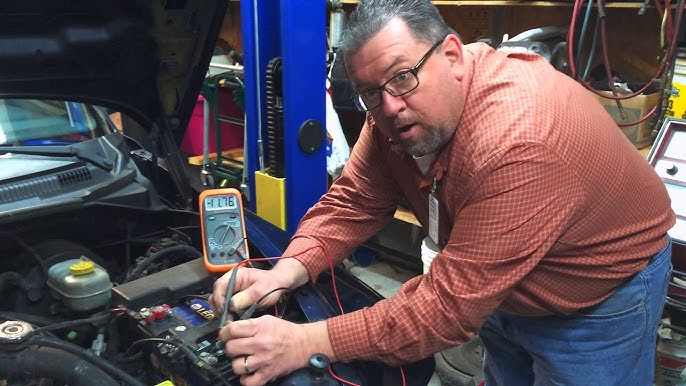
Set the multimeter to DC volts. Connect the probes to the battery terminals. A healthy battery reads about 12.6 volts or more.
- Check voltage with engine off
- Test voltage while engine runs
- Measure current flow in circuits
Battery Load Tester
A battery load tester puts pressure on the battery. It shows how the battery performs under real use.
The tester applies a load for a few seconds. A strong battery keeps voltage above 9.6 volts during the test.
- Connect tester clamps to battery terminals
- Apply load for 10-15 seconds
- Watch voltage drop during test
- Compare results to battery specs
Hydrometer Tools
A hydrometer checks battery acid strength. It measures specific gravity to find battery health.
Draw acid into the hydrometer. The float shows a number that tells the acid’s strength. Healthy batteries have a higher number.
- Open battery cell caps carefully
- Insert hydrometer tube into acid
- Pull acid into the tool
- Read the float’s number
- Compare with standard values
Step-by-step Testing Process
Testing a car battery is an important task for mechanics. It helps check if the battery works well or needs replacement.
The process involves preparing the battery, performing the test, and then understanding the results.
Preparing The Battery
Before testing, the mechanic cleans the battery terminals. Dirt or corrosion can give wrong readings.
- Wear safety gloves and goggles.
- Turn off the engine and all electrical devices.
- Remove any dirt or corrosion from battery terminals.
- Check the battery for cracks or leaks.
Performing The Test
Mechanics use tools like a multimeter or battery tester to check the battery’s condition.
- Set the multimeter to measure voltage.
- Connect the red probe to the positive terminal.
- Connect the black probe to the negative terminal.
- Read the voltage displayed on the meter.
- Use a load tester if available to check battery strength under load.
Interpreting Results
Reading the test results helps decide if the battery is good or needs replacement.
| Voltage Reading | Battery Condition | Action |
|---|---|---|
| 12.6 volts or more | Fully charged | No action needed |
| 12.4 to 12.6 volts | Moderately charged | Recharge soon |
| Below 12.4 volts | Low charge | Recharge or replace |
| Below 11.8 volts | Discharged or bad battery | Replace immediately |
Credit: www.youtube.com
Common Battery Issues Mechanics Find
Car batteries often face problems that affect their performance. Mechanics check batteries to find these common issues. Knowing these signs helps with proper battery care.
Battery problems can cause a car not to start or run poorly. Mechanics look for physical and electrical signs to diagnose battery health quickly.
Corrosion And Leakage
Corrosion occurs when battery acid reacts with metal parts. It looks like a white or green powder near the terminals. Leakage means acid escapes from the battery case, which can damage the battery and car parts.
- Check battery terminals for white or green buildup.
- Look for wet spots or acid stains around the battery.
- Inspect cables for damage or looseness.
- Listen for unusual smells like rotten eggs.
Sulfation Signs
Sulfation happens when lead sulfate crystals form on battery plates. It lowers battery capacity and causes failure. This often happens if the battery stays discharged too long.
| Sign | Description |
| Slow Charging | Battery takes longer to charge fully. |
| Low Voltage | Voltage drops quickly after charging. |
| Reduced Power | Car struggles to start or run accessories. |
Capacity Loss Indicators
Capacity loss means the battery holds less charge than it should. This reduces the time the battery can power the car without recharging. Mechanics measure this to check battery health.
- Load testing to see how the battery performs under stress.
- Measuring the battery’s voltage after resting.
- Checking the battery’s age and usage history.

Credit: www.batteriesplus.com
Frequently Asked Questions
How Do Mechanics Check A Car Battery’s Health?
Mechanics use a multimeter to measure voltage and check the battery’s charge level quickly.
What Tools Are Used To Test Car Batteries?
Common tools include multimeters, load testers, and battery analyzers for accurate checks.
How Long Does A Battery Test Usually Take?
A typical battery test takes about 5 to 10 minutes to complete.
Can A Battery Test Predict Battery Failure?
Yes, testing reveals weak cells or low voltage, indicating possible future failure.
Why Is Battery Load Testing Important For Cars?
Load testing shows how a battery performs under stress, ensuring it can start the engine.
Conclusion
Testing car batteries helps avoid unexpected breakdowns. Mechanics use simple tools to check battery health. They measure voltage and load to find problems fast. A good battery means your car starts every time. Regular battery tests save time and money.
You can trust mechanics to keep your battery in top shape. Knowing how batteries get tested makes you a smarter car owner. Keep your battery checked for a smooth driving experience. Simple tests protect you from getting stranded on the road.