Last Updated on November 25, 2025 by Aaron Blake
Have you ever wondered how car lifts actually work? Whether you’re a car enthusiast, a DIY mechanic, or just curious, understanding the basics can save you time and money.
Imagine being able to lift your car safely and easily, giving you full access underneath without any hassle. You’ll discover the simple science behind car lifts and how they make heavy lifting feel effortless. Keep reading—by the end, you’ll know exactly how these powerful machines keep your car off the ground and your work stress-free.
Contents
Types Of Car Lifts
Car lifts are machines that raise vehicles for easy access underneath. They help mechanics work safely and quickly.
There are several types of car lifts. Each uses different technology and power sources to lift vehicles.
Hydraulic Lifts
Hydraulic lifts use fluid pressure to raise cars. A pump pushes oil into a cylinder. The oil moves a piston that lifts the platform.
- Strong and smooth lifting
- Common in car repair shops
- Needs regular oil checks
- Can lift heavy vehicles
Electric Lifts
Electric lifts use motors to power a screw or chain. The motor moves the car up and down on the platform.
| Type | Power Source | Common Use |
| Scissor Lift | Electric Motor | Small to medium cars |
| Two-Post Lift | Electric Motor | Garage repairs |
| Four-Post Lift | Electric Motor | Storage and repair |
Air-powered Lifts
Air-powered lifts use compressed air to move pistons. The air pressure pushes the platform up to raise the car.
Advantages of air-powered lifts:
- No oil needed, so less mess
- Good for light to medium cars
- Quick lifting and lowering
- Needs an air compressor to work
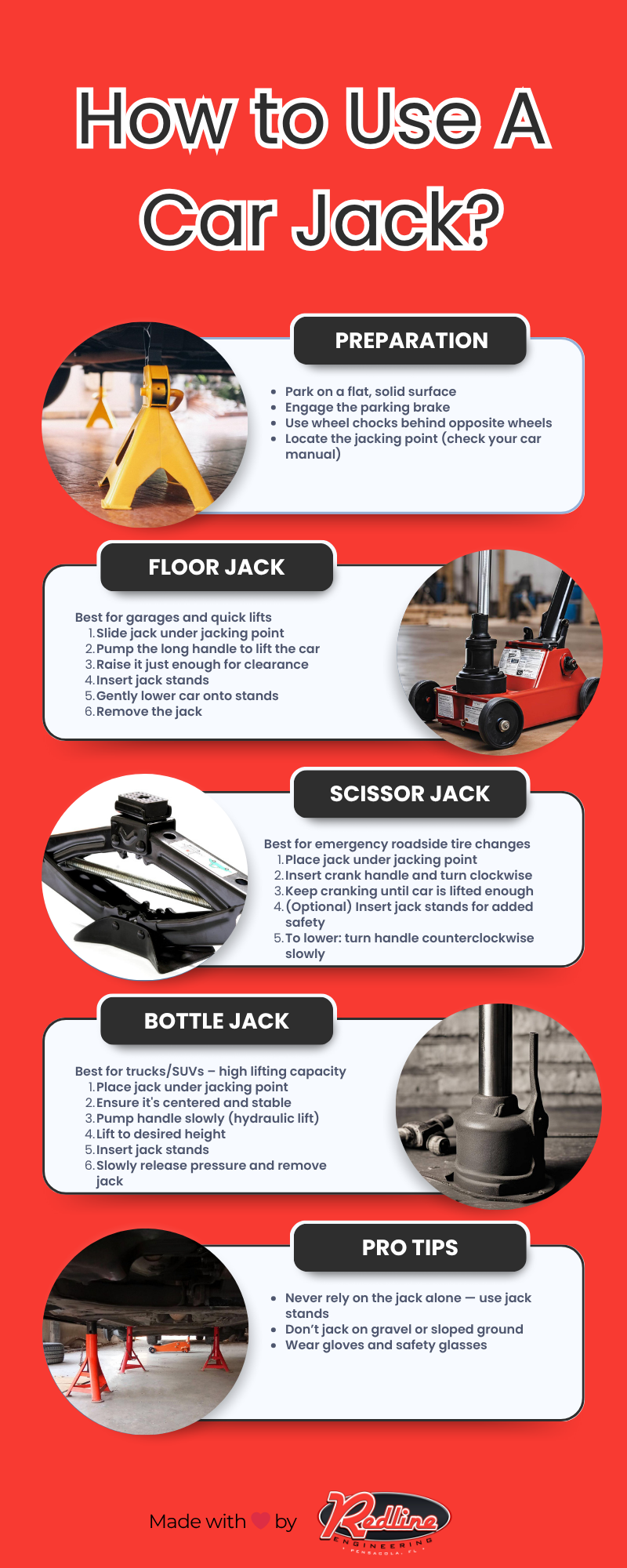
Credit: www.redlinestands.com
Key Components
Car lifts are important tools that help move vehicles safely and efficiently. They use several main parts to work correctly.
Understanding these parts helps you see how car lifts operate and stay safe during use.
Lift Mechanism
The lift mechanism is the main part that raises and lowers the car. It can use different methods like hydraulic power or electric motors.
- Hydraulic cylinders:Use fluid pressure to move the lift up and down.
- Screw drives:Turn a threaded rod to raise or lower the platform.
- Chains and pulleys:Help transfer force smoothly in some lifts.
Safety Locks
Safety locks stop the lift from moving accidentally. They keep the car secure while it is lifted.
| Type | Function |
| Mechanical Locks | Engage automatically when the lift rises to hold it in place. |
| Automatic Locks | Use sensors to detect position and lock the lift securely. |
| Manual Locks | Require the operator to engage them for extra safety. |
Control Systems
Control systems let users operate the car lift. They include buttons, switches, and safety features.
- Start and stop controls to move the lift up or down.
- Emergency stop buttons for quick shutdown.
- Indicators to show lift position and status.
Safety Practices
Car lifts help move vehicles safely and quickly. Using them properly keeps people and cars safe. Follow key safety practices to avoid accidents.
Understanding how to use and maintain car lifts ensures a safe work area. Always pay attention to installation, upkeep, and weight limits.
Proper Installation
Correct installation is the first step to safety. A poorly installed lift can cause serious accidents. Use certified technicians for setup.
- Choose a flat, solid surface for mounting.
- Follow manufacturer instructions carefully.
- Check all bolts and anchors for tightness.
- Ensure electrical connections meet safety codes.
- Verify the lift is stable before first use.
Regular Maintenance
Keep your car lift in good condition with regular checks. Maintenance helps spot problems early. This prevents breakdowns and injuries.
| Maintenance Task | Frequency |
| Inspect hydraulic fluid | Monthly |
| Tighten bolts and nuts | Monthly |
| Check cables and chains | Weekly |
| Clean moving parts | Weekly |
| Test safety locks | Before each use |
Load Capacity Limits
Never exceed the lift’s weight limit. Overloading can cause equipment failure and harm people.
Important load capacity tips:
- Know the maximum weight your lift can handle.
- Weigh the vehicle before lifting if unsure.
- Distribute weight evenly on the lift arms.
- Do not lift vehicles with extra heavy equipment attached.
- Check the load rating label on the lift before use.

Credit: www.redlinestands.com
Maximizing Efficiency
Car lifts help move vehicles between floors quickly and safely. Using them efficiently saves time and energy. Understanding how to improve their operation benefits garages and repair shops.
Efficiency in car lifts means faster service, better space use, and lower costs. This guide explains key ways to maximize lift performance.
Optimizing Lift Speed
Faster lift speed reduces waiting time and increases workflow. Proper maintenance and control settings help achieve this. Safety should never be compromised for speed.
- Regularly check hydraulic fluid levels
- Inspect cables and pulleys for wear
- Adjust speed controls as recommended
- Keep lifting mechanisms clean and lubricated
- Train operators on smooth lift handling
Space Utilization
Car lifts help save floor space by stacking vehicles vertically. Proper layout planning increases capacity and accessibility. Different lift types fit various space needs.
| Lift Type | Space Needed | Vehicles Handled |
| Two-Post Lift | Small | 1 |
| Four-Post Lift | Medium | 1 |
| Stacker Lift | Large | 2 |
| Scissor Lift | Small | 1 |
Energy Conservation
Saving energy lowers costs and reduces environmental impact. Efficient lifts use less power and work smoothly. Simple habits help conserve energy in daily use.
- Turn off lifts when not in use
- Use energy-efficient motors
- Schedule regular maintenance for optimal performance
- Install timers or sensors to reduce idle time

Credit: www.civilera.com
Frequently Asked Questions
How Do Car Lifts Operate Safely?
Car lifts use strong hydraulics or cables to raise vehicles securely and steadily.
What Types Of Car Lifts Are Most Common?
Hydraulic, electric, and scissor lifts are widely used in garages and repair shops.
How Much Weight Can A Typical Car Lift Hold?
Most car lifts support between 7,000 to 12,000 pounds safely.
Why Is Regular Maintenance Important For Car Lifts?
Maintenance prevents breakdowns, ensures safety, and extends the lift’s working life.
Can Car Lifts Fit All Vehicle Sizes?
Many lifts adjust to different sizes but always check weight and size limits first.
Conclusion
Car lifts use simple machines like hydraulics or cables to raise vehicles. They help mechanics reach the car’s underside easily and safely. Knowing how car lifts work can make repairs faster and safer. Proper use ensures your car stays stable and secure during lifting.
Understanding these basics helps you appreciate the tools in a garage. Next time you see a car lift, you’ll know its key role. Safe lifting keeps both the car and people protected. It’s a smart way to handle heavy vehicles every day.